Journal
Photographs in New York City parks: when a permit is needed
Handheld portraits, tripods, lights, a wedding party of thirty: what the city's rules actually say, who issues what, and why a photographer cannot promise a permit.
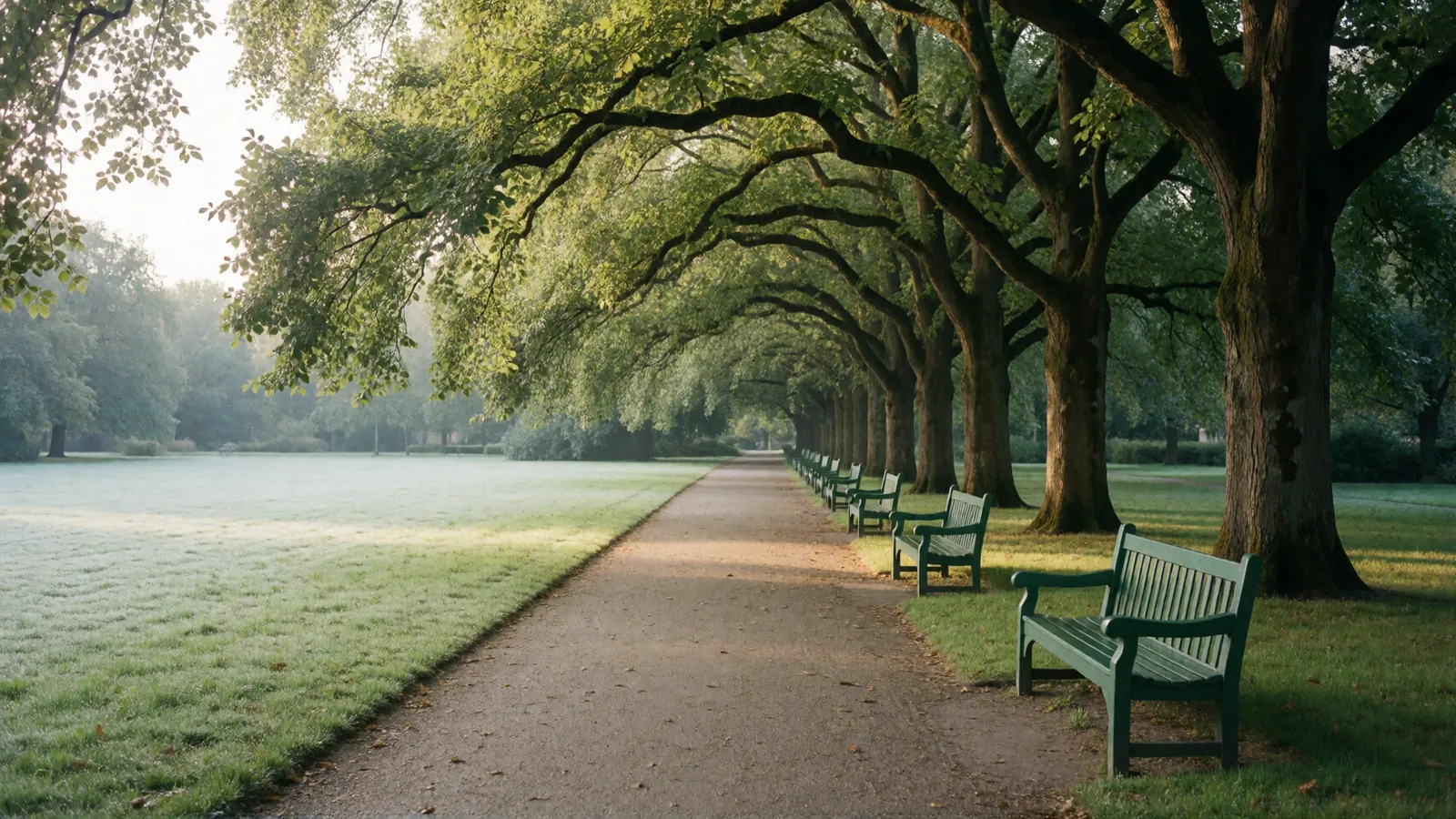
Usually not, for a portrait session with a camera in the hand. Most portrait sessions in City parks and on sidewalks, with a handheld camera or a tripod, need no City permit.
What changes the answer is what the session brings, how much room it takes, and whose park it is — because several of the city's best-known parks are not run by the City at all, and a New York State park has a rule of its own. None of those answers is the photographer's to give, which is why no photographer can honestly promise you a permit. What follows takes the rules in the order a session meets them: the City's, the parks the City does not run, the State's, and private places.
What the City's rules say
Photography on City property needs a permit from the Mayor's Office of Media and Entertainment when it uses vehicles or equipment, or takes exclusive use of a street or a sidewalk. 43 RCNY § 9-01 (opens the source in a new tab)
Under the same rules a camera held in the hand, and a camera on a tripod, is not “equipment”. 43 RCNY § 9-02 (opens the source in a new tab)
The second rule is the one people have not heard of: a tripod, on its own, does not change the answer. The City's test is what the shoot brings and how much room it takes.
Most outdoor portraits need no lights anyway. Open shade, the soft side of a building and the hour before sunset do the work a light would do, which is one reason a portrait session in a park is usually a camera in the hand and nothing else.
What changes the answer
Lights, stands, props and anything that takes over the space are equipment, and change the answer. So do a vehicle brought for the shoot and anything that takes exclusive use of a street or a sidewalk.
In a portrait session, that means things like a light on a stand for an evening portrait, a backdrop on stands, an arch or furniture carried in for a styled set, or a car parked for the photographs.
Evening portraits are where a session most often meets the rule. Once the light goes, the usual answer is a light on a stand, and a light on a stand is equipment; the other answer is to finish before the light does.
Taking over the space looks like holding a stretch of path clear, or roping off a corner of a lawn, rather than working around whoever is already there. A portrait session works around people; a production asks them to wait.
A wedding party of thirty is not equipment. But thirty people arranged across a path are taking over the space, and that changes the answer too. Where that line sits on the day is for the agency to say, not the photographer.
Parks the City does not run
Several parks are run by conservancies and trusts with their own rules. Among the places run this way are Central Park, Brooklyn Bridge Park, Hudson River Park, Bryant Park, the High Line, Battery Park City, Madison Square Park and Queens Botanical Garden, each with its own process for photographs.
At any of them, the answer is that place's own. The rules differ from one to the next, and what is true in one park says nothing about another, so the studio reads each place's rules before it plans a session there. If you have one of them in mind, name it when you book, and the check starts there.
Flushing Meadows Corona Park, by contrast, is a City park, and the City's rules above are the ones that apply there.
State parks are a different rule
In a New York State park, taking photographs for commercial or publicity purposes needs a permit, whatever the camera. 9 NYCRR 372.7 (opens the source in a new tab)
Gantry Plaza State Park in Long Island City is one, and it is inside the city.
The State's test is the opposite of the City's: it is about what the photographs are for, not what the photographer carries, so a camera in the hand does not change the answer there. Whether a particular session counts as commercial is the State's decision, and the studio asks before it plans one there.
In practice, a session in a State park is planned with that question answered first, and with a second place in mind that does not need a permit.
Private places are another question
A building's courtyard, a restaurant's garden, the roof of an apartment house: the City's rule above is about photography on City property, and these places are not City property. Ask whoever runs the place before the day, and ask in writing if the answer matters; it can be yes, yes with conditions, or no.
Some places that feel public belong to somebody: a plaza in front of an office building, a garden square, a courtyard between buildings. When it is not clear who runs a place, the studio finds out before it plans photographs there.
Drones
A drone needs more than any of the above: a permit is required to take off or land an unmanned aircraft anywhere in New York City. 38 RCNY § 24-02 (opens the source in a new tab)
Several parks ban drones outright. We do not offer drone or aerial photography, and no page on this site offers it. The reasons are on the page about drones.
Fees, insurance, and who decides
Permit fees and insurance requirements belong to the agencies that set them, and they change, so this site prints none of them.
A permit is granted by the agency that issues it, never by the photographer who applies for it.
A permit also keeps its own calendar. A session that needs one is planned early, and its date is not treated as settled until the agency has answered.
The application describes the session as it will actually happen — how many people, what equipment, how long and where — and the session then keeps to what the permit describes.
What the studio says instead. We check what each location requires, apply for any permit a shoot needs, and plan the shoot around the answer. The agency or the park decides; we cannot promise that a permit will be granted.
Why the studio will not put a promise in its place is on the page about permits.
Before a session in a park
Whose park is it?
A City park, a place run by its own conservancy or trust, or a State park. That decides whose rules apply before anything else does.
What will the session bring?
A camera in the hand or on a tripod keeps to the City's own definition. A light on a stand, a prop that stands by itself or a vehicle is equipment.
How much room will it take?
A couple and a photographer on a path is a portrait session. A group that closes the path, or a set that holds a lawn, is taking over the space.
Who decides, and when?
If a permit is needed, the agency or the park decides, in its own time. The session is planned around the answer, never ahead of it.
The sessions this most often concerns are engagement sessions, family photographs outdoors, and the portraits after an elopement or a City Hall wedding.
None of this is yours to settle. Say where you would like to be photographed and what you have in mind — a walk, a picnic, a styled set — and the checking is the studio's.
The rules this page cites
- 43 RCNY § 9-01 (opens the source in a new tab) Photography on City property needs a permit from the Mayor's Office of Media and Entertainment when it uses vehicles or equipment, or takes exclusive use of a street or a sidewalk.
- 43 RCNY § 9-02 (opens the source in a new tab) The definitions: a camera held in the hand, and a camera on a tripod, is a hand-held device and not “equipment”.
- 9 NYCRR 372.7 (opens the source in a new tab) In a New York State park, taking photographs for commercial or publicity purposes needs a permit, whatever the camera.
- 38 RCNY § 24-02 (opens the source in a new tab) A permit is required to take off or land an unmanned aircraft anywhere in New York City.
Each was read at its source in September 2026. Rules change, and the agency's own page is always the current word.
Book a session, or check a date
Sessions are booked straight from the calendar, and a wedding date is held for seven days while you read the agreement. Nothing is paid on this website, at any step.